Quick answer
Titanium flat irons heat up fast and pass heat to hair quickly, which suits thick, coarse or hard-to-straighten hair. Ceramic irons heat more gently and evenly, which suits fine, thin or damaged hair. Tourmaline is a coating that brands say adds smoothness. Whatever the plate, the temperature you choose matters more than the material.
Key takeaways
- Titanium transfers heat fast. It suits thick, coarse and natural hair that needs fewer passes.
- Ceramic heats evenly and gently. It suits fine, thin and damaged hair.
- Tourmaline is a coating added for a smoother glide and less frizz.
- Temperature matters more than plate type. Keratin starts to break down at about 458°F in lab tests.
- Dermatologists advise flat irons on low or medium heat, no more often than every other day.
On this page
Flat iron boxes love to talk about plates: titanium, ceramic, tourmaline. Each does behave a little differently. Here is what the difference means for your hair.
The quick answer
| Your hair | Better plate |
|---|---|
| Fine, thin or damaged | Ceramic |
| Medium, healthy | Either |
| Thick, coarse | Titanium |
| Coarse natural hair, silk press | Titanium, on the lowest setting that works |
How each plate heats
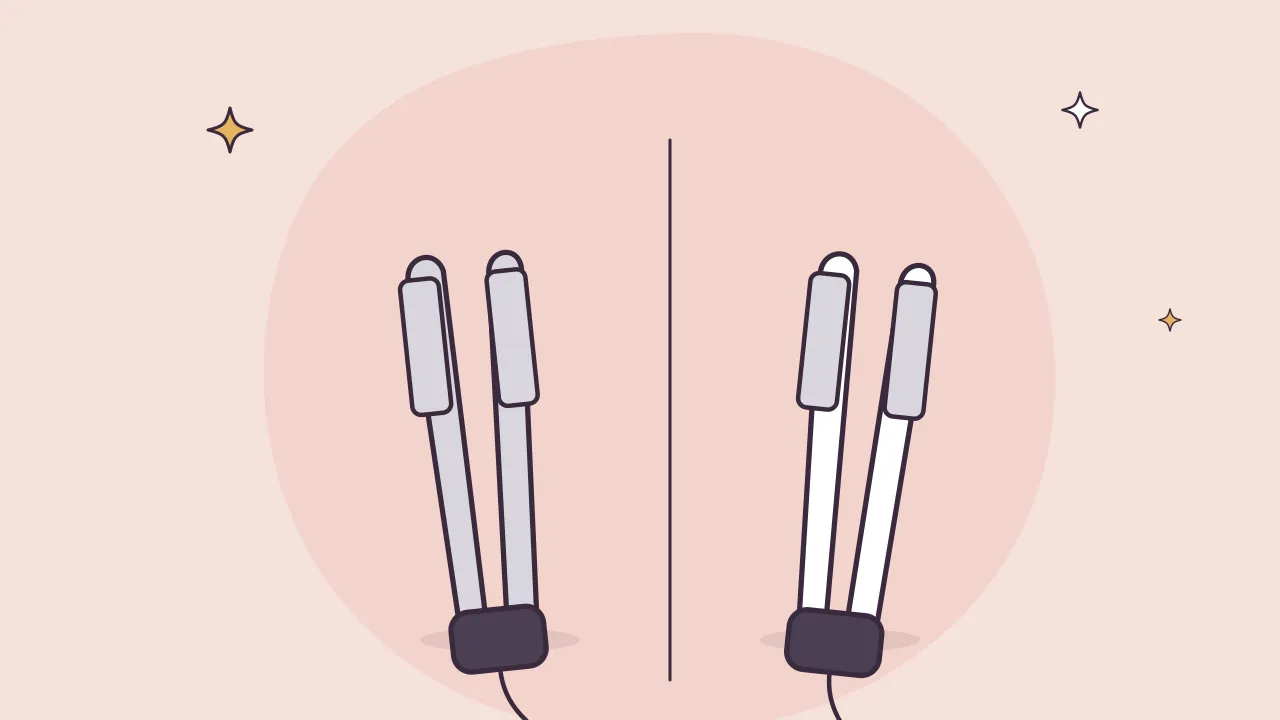
Titanium heats up fast and transfers heat to the hair quickly. It also recovers heat fast between sections. That speed is great for thick hair, but it can be too much for fine hair.
Ceramic heats more gently and evenly, with fewer hot spots. That makes it more forgiving, especially if you are still learning.
Tourmaline is a crushed mineral added to coatings, often over ceramic. Brands say it adds glide and fights frizz.
Side by side
| Titanium | Ceramic | Tourmaline-coated | |
|---|---|---|---|
| Heat-up speed | Fast | Moderate | Moderate |
| Heat transfer | Quick and strong | Gentle and even | Gentle and even |
| Best for | Thick, coarse hair | Fine, damaged hair | Frizz-prone hair |
| Learning curve | Less forgiving | Forgiving | Forgiving |
| Durability | Very durable | Coatings can chip | Coatings can chip |
Temperature still matters most
No plate makes high heat safe. In a lab study, the main protein in hair began to break down at about 237°C, which is roughly 458°F, and heat visibly damaged the outer cuticle 1.
The American Academy of Dermatology recommends using a flat iron on dry hair, at a low or medium setting, no more often than every other day 2. Our flat iron temperature guide suggests starting points for each hair type.
Which to choose
Choose ceramic if your hair is fine, thin, colored or damaged, or if you want a forgiving iron. Choose titanium if your hair is thick, coarse or very hard to straighten.
Browse the latest picks:
Questions people ask
Is titanium or ceramic better for fine hair?
Ceramic is usually better for fine hair, because it heats gently and evenly. Fine hair heats through quickly, so the slower transfer of ceramic makes it easier to avoid overheating.
Is titanium better for thick hair?
Titanium is often better for thick hair, because it passes heat quickly and stays hot from section to section. That means fewer passes on hair that is hard to straighten.
Does plate material matter?
Plate material matters, but less than temperature and technique. A well-made iron on a lower setting with one slow pass beats any plate on maximum heat.
What is tourmaline in a flat iron?
Tourmaline is a crushed mineral added to plate coatings, often on ceramic. Brands say it helps the iron glide and reduces frizz. Many buyers like the smooth finish.
Do titanium irons get hotter?
Titanium irons usually heat up faster and transfer heat more quickly, though both types can reach similar top temperatures. Titanium can feel hotter on the hair for that reason.
Which is better for a silk press?
For a silk press on coarse natural hair, many people prefer titanium for its fast, steady heat. Use the lowest setting that works and a good blow-dry first.
Do ceramic plates chip?
Ceramic-coated plates can chip over time, especially if the iron is dropped. A chipped plate can snag hair, so replace the iron if you see damage.
How often should I replace my flat iron?
You should replace your flat iron when the plates are chipped or scratched, it heats unevenly, or the cord is damaged. A damaged cord is a safety risk.
Sources
- 1 Lima CRRC, Couto RAA, Freire TB, et al. Heat-damaged evaluation of virgin hair . J Cosmet Dermatol , 2019 ; 18(6):1885-1892 . Study
- 2 Hair styling without damage . American Academy of Dermatology . Medical organization